
 (832) 422-0354
  Everyday: 8:00am - 6:00pm

Concrete Retaining Wall Contractors in Houston, TX
Houston's clay soil swells when it rains and shrinks when it dries out. That movement pushes hard on any wall that holds back a slope.
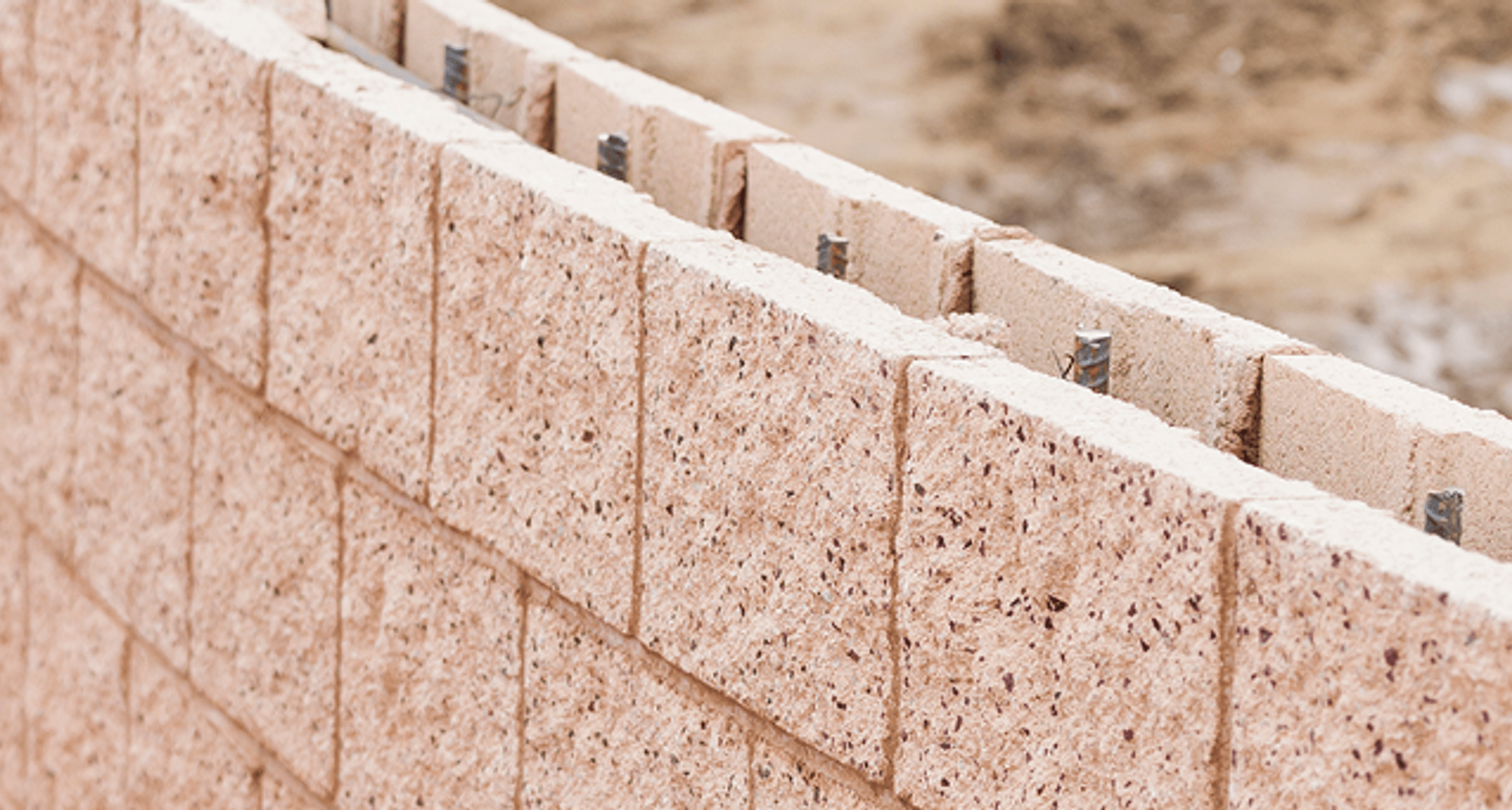
Slabs on Grade is a retaining wall contractor in Houston that builds walls engineered for these exact soil and drainage conditions. We build concrete block, poured concrete, and brick retaining walls, and we handle every project from footer excavation to final backfill.

- Owner-Operated
- 5.0-Star Google Rating
- Licensed & Insured
- Free On-Site Estimates
- Residential & Commercial

Retaining Wall Builders in Houston Since 2010
A retaining wall holds soil in place where the ground changes height. Built right, it stops erosion, levels a sloped yard, and keeps soil from washing out under driveways, patios, and slabs. Built wrong, it leans, cracks, and fails within a few years.
Slabs on Grade handles every phase of retaining wall work. That includes site evaluation, footer excavation, block laying or forming and pouring, drainage, and final backfill. We install new walls, add tiered and multi-level wall systems, put in French drains, and repair or rebuild walls that have failed.
We are concrete wall installers first, so every wall starts with a solid footing and a plan for water. As concrete retaining wall contractors, we have built walls for homeowners, HOAs, developers, and commercial property owners across Greater Houston. The same crew that starts your job finishes it.
Request a Free EstimateWhy Choose Slabs on Grade
- Family-owned and in business since 2010
- 5.0-star rating on Google
- Over 1,000 customers served
- Drainage core and filter fabric in every wall
- Permits pulled when the job needs one
- Written workmanship warranty
 Family-owned and in business since 2010
Houston Retaining Walls for Homes, HOAs, and Businesses
If your slope washes out after heavy rain, your old wall is leaning, or you need flat ground before you build, a retaining wall is usually the fix.
Homeowners With Sloped or Eroding Yards
This is the most common job we take on. Houston's clay soil moves as it gets wet and dries out, and a slope that looked stable for years can start to slide. We check the grade, drainage, and load before we recommend a wall system.
Homeowners Who Want Level Outdoor Space
A retaining wall is often the first step before a backyard patio. We can build the wall and the concrete patio in one scope, so the base and the finished surface are planned together.
HOAs, Developers, and Commercial Owners
We build larger slope walls, tiered walls along common areas, and erosion control for multi-lot sites. These walls are built for heavier loads and more water than a typical backyard wall. Our commercial concrete services cover the rest of the site work too.


What a Retaining Wall in Houston, TX Has to Handle
Much of the Houston area sits on expansive clay. This soil swells when it gets wet and shrinks when it dries. After a storm, soaked clay behind a wall gets heavier and pushes harder. Houston also gets about 50 inches of rain in a typical year, and a single storm can drop a lot of it fast.
Water is the biggest threat. When water cannot drain out from behind a wall, pressure builds. This is called hydrostatic pressure, and it is the most common reason walls lean, bow, or crack.
That is why drainage is part of every wall we build. We place a gravel drainage core behind the wall and wrap it in filter fabric so soil does not clog it. Then we give the water a way out and compact the backfill so it does not settle later. Block walls also get the right footer depth and a slight backward lean, called batter, so the wall leans into the hill.
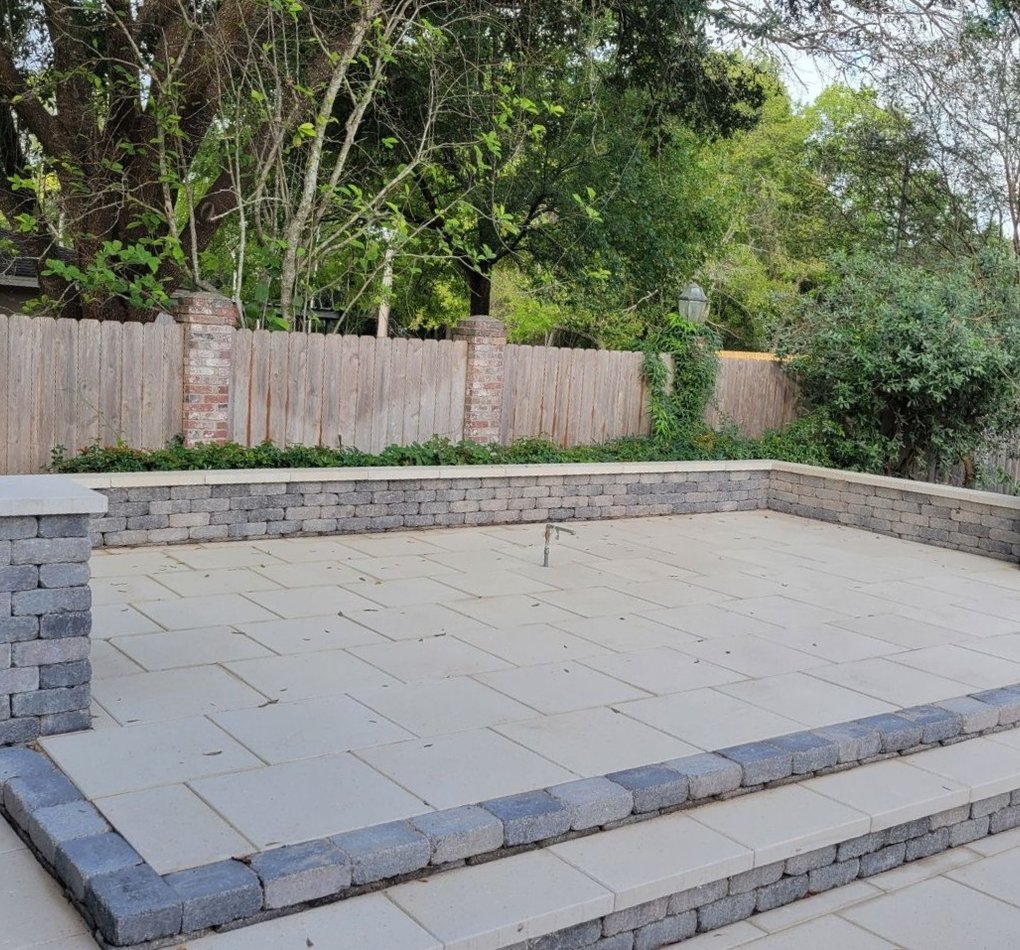
Concrete Retaining Walls in Houston: Choose the Right Type
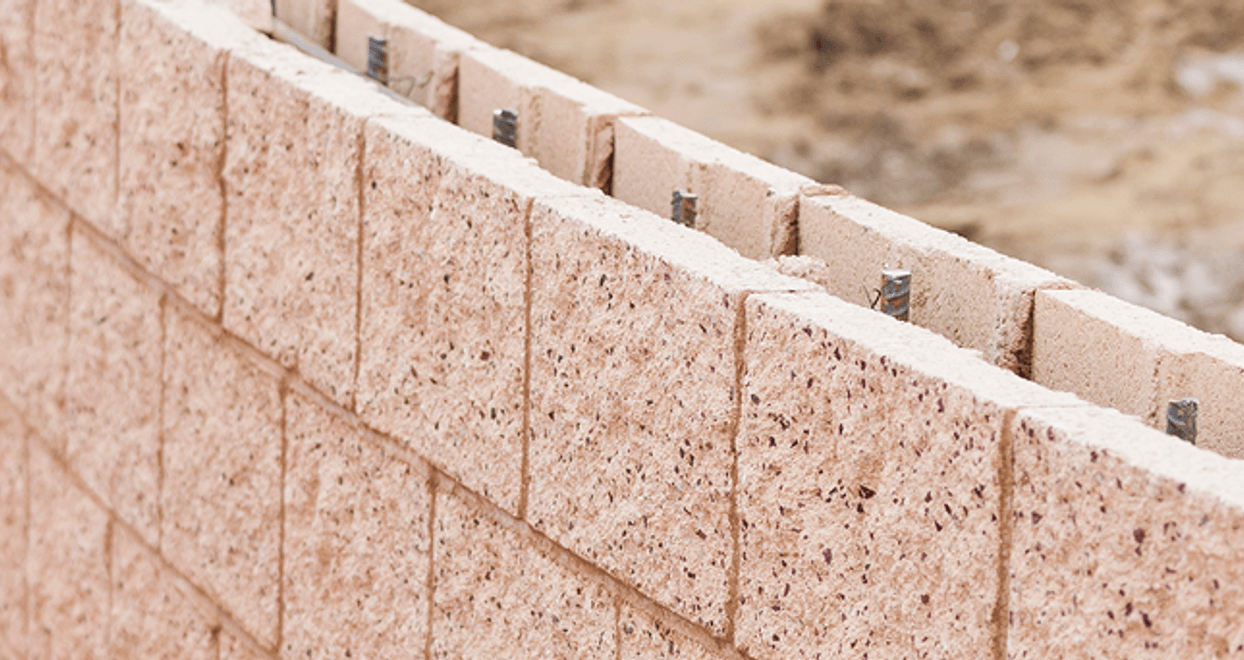
Concrete Block Retaining Wall
The system we install most. Concrete block walls are strong, usually cost less than poured concrete, and work for many heights and loads. The right batter, a drainage core, and the right footer depth are what separate a wall that holds from one that leans.
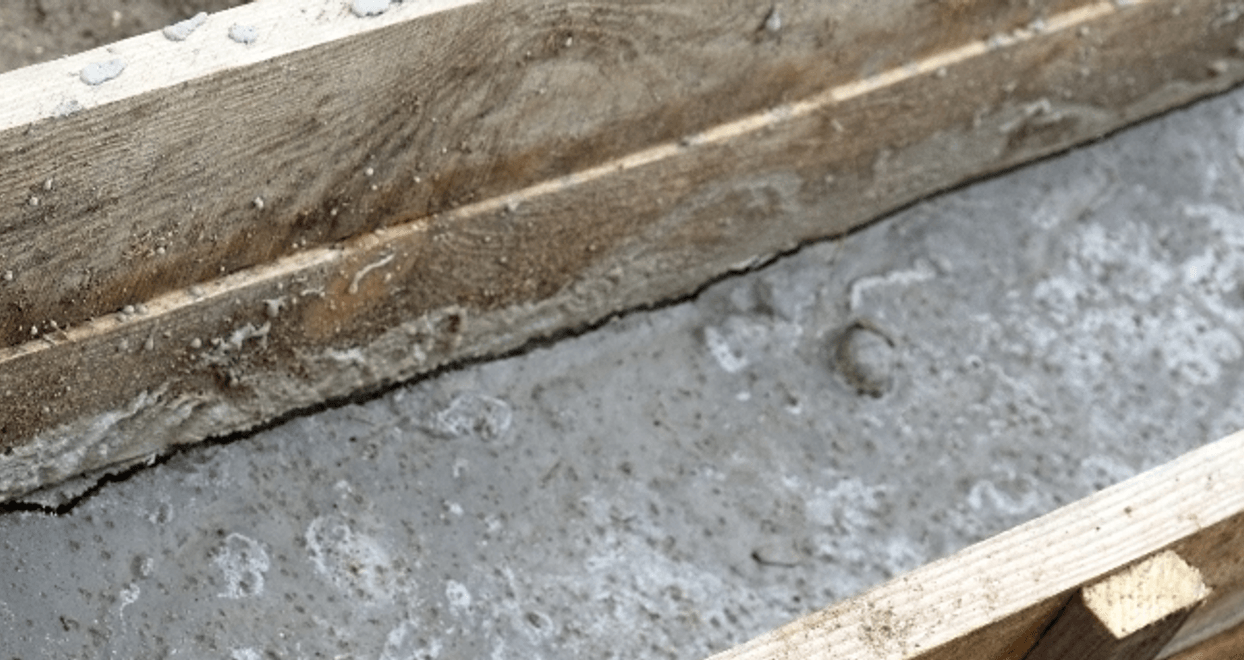
Poured Concrete Retaining Wall
A solid poured wall gives the most strength and a clean, finished look. We reinforce it with steel rebar and pour it to the right thickness for your site. It costs more up front because of the forming work, but it is a strong fit for taller walls and walls that double as a design feature.
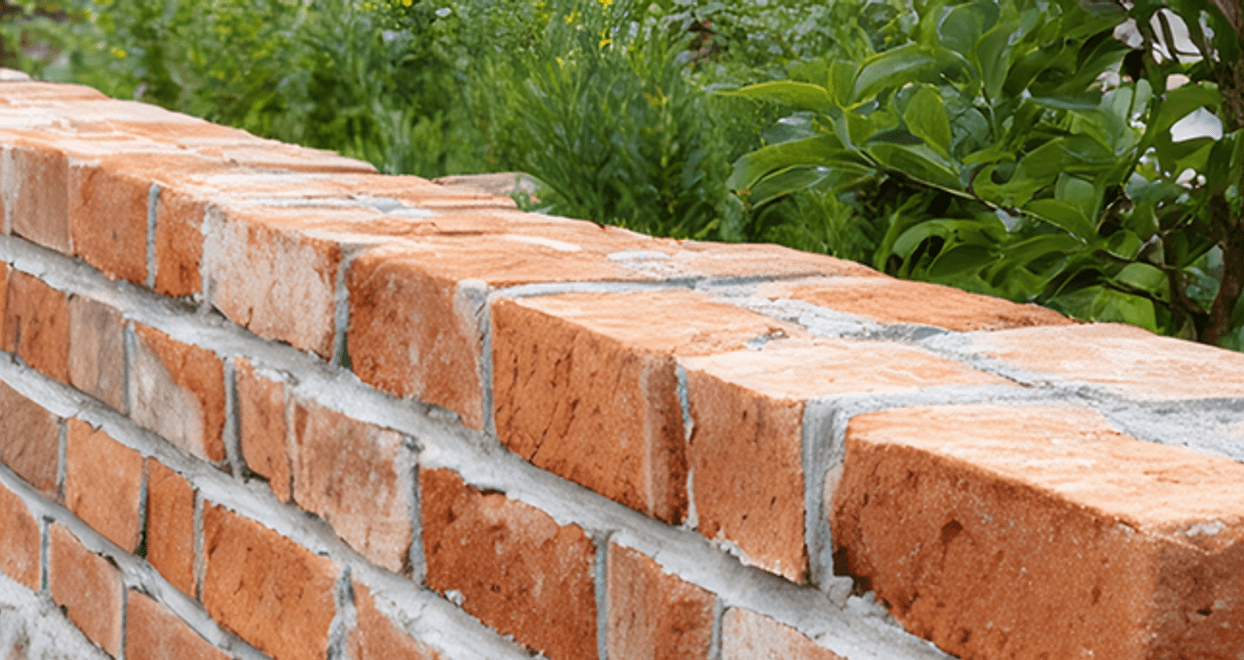
Brick Retaining Wall
Brick gives a classic look that suits many older Houston homes and mature yards. It works best for lower walls where looks matter most. We build brick walls on proper footings with drainage behind them, so they perform as well as they look.
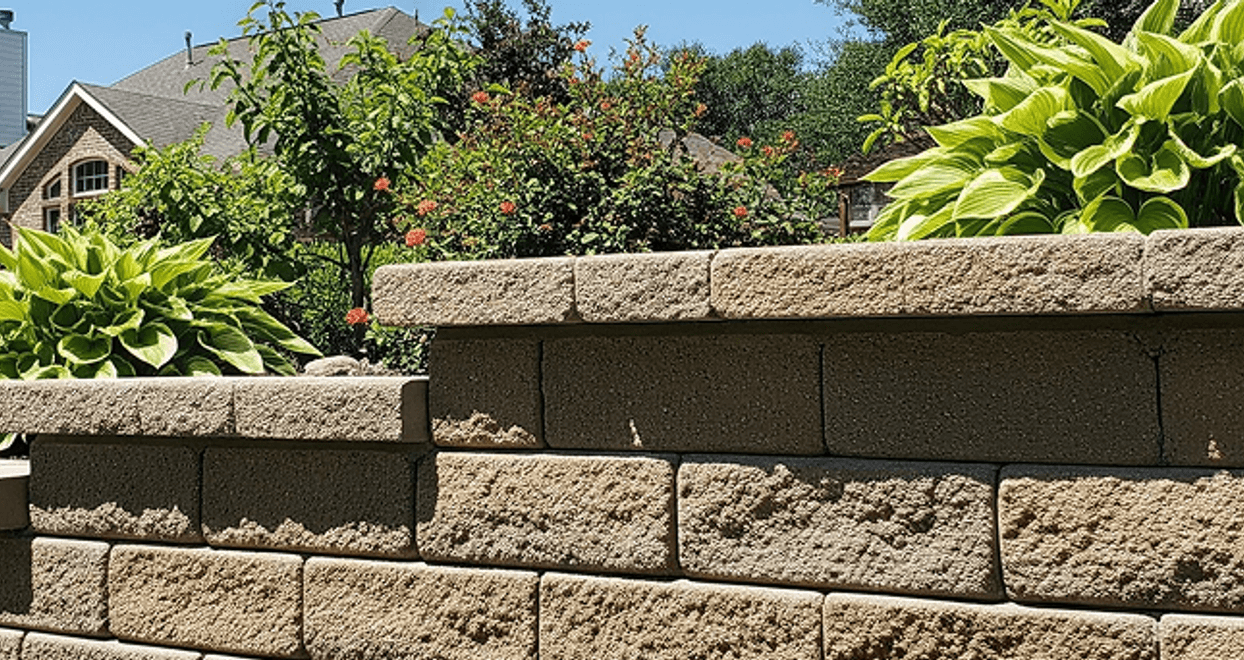
Segmental Retaining Wall Systems
Interlocking segmental units are built for larger and tiered walls. These systems handle heavy soil pressure. They are common on sloped lots where a single wall would be too tall to hold the grade on its own.
Retaining Wall Repair in Houston
- 01
Leaning or Bowing
A wall that tilts forward or bulges in the middle is losing its fight with the soil behind it. The cause is usually drainage or the footing, and the lean tends to get worse with every heavy rain.
- 02
Cracks and Broken Joints
Stair-step cracks in mortar, split blocks, or cracks that keep getting wider mean the wall is moving. A hairline crack in poured concrete is not always a problem, but a wide or growing crack needs a closer look.
- 03
Soil or Water Coming Through
Mud washing out between blocks, wet spots on the wall face, or water pooling at the base all mean water is not draining the way it should. Blocked or missing drainage is behind most of the failed walls we see.
- 04
Repair or Rebuild?
Some walls can be saved by rebuilding a section, fixing the drainage, or resetting the top courses. A wall with a failed footing or a big lean usually needs a full rebuild. We inspect it on-site and give you a straight answer. If the driveway or walk next to it is cracked too, we handle concrete repair as well.
Retaining Wall Installation in Houston
Start to Finish
We keep you informed at every stage. Here is what happens from your first call to the final walkthrough.
Free On-Site Estimate
We come to your property, measure the slope, check the soil and drainage, and talk through wall options. We also check whether your wall needs a permit or an engineer's design. You get a written estimate with a clear scope.
Demo & Removal
If an old wall has failed, our crew tears it out and hauls it away. We remove loose or soaked soil so the new wall starts on firm ground.
Excavation & Footer
We dig the trench to the depth your wall needs and compact the base. Block walls sit on a compacted base. Poured walls get a concrete footer reinforced with steel rebar.
Build & Reinforce
We set block courses with the right batter, or we build forms and place steel rebar before the pour. Brick walls go up on their own footing with mortar joints.
Drainage & Backfill
We place the drainage core and filter fabric behind the wall and give water a clear path out. Then we backfill and compact the soil behind the wall.
Cap, Clean Up & Walkthrough
We finish the top of the wall, clean up the site, and walk the finished wall with you. You will know how it drains and what to watch for over time.
Our Customer Reviews
How Much Does a Retaining Wall Cost in Houston?
We price every wall after we see the site, because two walls of the same length can cost very different amounts. Many cost guides price retaining walls by the square foot of wall face, which is the length times the height. Here is what moves your price up or down.
Height and Length
A bigger wall face means more block or concrete and more labor. Taller walls also need deeper footers, and past certain heights they need a permit and an engineer's design.
Wall Material
Concrete block usually costs less than poured concrete of the same size. Brick and decorative faces add cost. Ask us to price more than one option so you can compare.
Site, Soil, and Drainage
Tight access, tearing out an old wall, soft soil, and extra drainage work all affect the price. So does hauling off the soil we dig out.

Our quote form lets you choose a budget range, from under $5,000 to $40,000 and up. Pick yours, or call (832) 422-0354, and we will plan a wall that fits it.
Get Your Free EstimateRetaining Wall Service Across Greater Houston
Houston and the South and East Side
We build and repair retaining walls in Houston, Pasadena, Baytown, Pearland, Friendswood, and League City. Much of this area is flat and low, so the drainage behind a wall matters as much as the wall itself.
North Houston Suburbs
We are based in Pinehurst, northwest of Houston, so Spring, The Woodlands, Tomball, Cypress, and Conroe are close to home. Many neighborhoods here have HOA or design review rules, so plan time for approval before the wall goes in.
West and Southwest Suburbs
We also serve Katy, Sugar Land, and Missouri City. These areas have a lot of flat clay ground where water drains slowly, so we plan the drainage path before we set the first block. See all of our service areas.
Houston Retaining Wall Questions and Answers
Straight answers from our crew. Still have a question? Call us and talk to a real person.
Get a Free EstimateHow much does a retaining wall cost in Houston?
Cost depends on wall height, length, material, and site conditions. A concrete block retaining wall usually costs less than a poured concrete wall of the same size. Drainage needs, footer depth, old wall removal, and site access also affect the price. We give you a free written estimate with a clear scope, so you know the number before any work starts.
Do I need a permit for a retaining wall in Houston?
It depends on the wall and the city. Inside Houston city limits, the residential building code exempts retaining walls up to 4 feet tall, measured from the bottom of the footing to the top of the wall. A permit is needed for a taller wall. It is also needed for a shorter wall that holds up extra load, called a surcharge, such as a driveway, a building, or a slope above the wall. Nearby cities set their own rules, and your HOA may need to approve the plan too. We check the rules for your address before any work begins.
How tall can a retaining wall be without an engineer?
The International Residential Code, which the City of Houston has adopted with local amendments, sets two lines. A wall that is not braced at the top and holds back more than 4 feet of soil must be designed to accepted engineering standards. So must a wall over 2 feet tall that also resists other side loads, such as wind on a fence built on top of it. In practice, most tall or loaded walls need an engineer's design. Rules vary by city, so we confirm what your project needs during the estimate.
How long does a retaining wall last?
A well-built concrete or block retaining wall should last for decades. The most common cause of early failure is poor drainage behind the wall. Trapped water builds pressure that pushes the wall out of line. Every wall we build includes a drainage core and filter fabric as a standard part of the job.
What is the best retaining wall material for Houston's soil?
Houston's expansive clay puts heavy side pressure on retaining walls, especially after a hard rain. Concrete block and poured concrete walls are the most reliable choices for these conditions. Brick works well for lower, decorative walls. The right choice depends on wall height, the load behind the wall, and the look you want.
How do I know if my retaining wall needs repair or replacement?
Leaning, bowing, cracks along mortar joints, soil washing through the wall face, and water pooling at the base are all warning signs. In many cases the drainage behind the wall has failed, and water pressure did the damage over time. We inspect the wall on-site and tell you plainly whether a repair will hold or a full rebuild is the better call.
What should I look for in concrete wall installers?
Look for a retaining wall contractor with real experience in Houston's soil and drainage, not just general concrete work. Ask three questions. Do you pull permits when the job needs one? Do you include drainage in every wall? Will the same crew that starts the job finish it? The answers tell you quickly whether you are talking to a specialist.
Ready to Get Started?
Call or schedule online with Slabs on Grade today for your free on-site concrete estimate. We reply to every inquiry within one business day.
 (832) 422-0354