
 (832) 422-0354
  Everyday: 8:00am - 6:00pm

Houston Concrete Company, Neighborhood by Neighborhood
Slabs on Grade is a Houston concrete company that builds to City of Houston rules. We pour driveways, sidewalks, patios, and slabs from the Heights to Kingwood, and we pull the Houston Public Works permit when your job needs one. Every project starts with a free on-site estimate.

- 5.0 Google Rating (23 Reviews)
- Family-Owned Since 2010
- Licensed & Insured
- Free On-Site Estimates
- Residential & Commercial

Concrete Work Inside Houston City Limits
Houston is the largest city in the United States without formal zoning. That does not mean anything goes. Inside the city limits, a driveway or sidewalk that meets the street needs a Houston Public Works permit. Many lots sit in a mapped floodplain, where Chapter 19 of the city code adds its own rules. And in most subdivisions, recorded deed restrictions do the job that zoning does in other cities.
Slabs on Grade is a family-owned concrete contractor that has poured concrete across the Houston area since 2010. Our base is in Pinehurst, and we don't have an office in Houston. We drive down SH 249, which ends at I-45 in north Houston, and meet you at the property. There we check the soil, the drainage, the street, and the paperwork before we write your quote.
The city covers about 640 square miles of land, and the same rules play out differently on every street. A raised bungalow in the Heights needs different work than a ranch house in Oak Forest.
Request a Free EstimateHouston at a Glance
- County: Harris, with parts in Fort Bend and Montgomery
- ZIP codes: 77008 (Heights), 77018 (Garden Oaks), 77096 (Meyerland), 77339 (Kingwood), and many more
- Permits: Houston Public Works for driveways, sidewalks, and curbs in the right-of-way
- Floodplain: Chapter 19 rules cover the 100-year and 500-year floodplains
- Soil: Beaumont Formation clay and Lissie Formation soils
- From our base: South from Pinehurst on SH 249 to I-45 in north Houston

What We Build Across the City of Houston
In Houston, city rules shape the work as much as the soil does. That is why sidewalk and driveway work tops this list. You can also see all concrete services.
Sidewalk Repair in Houston
Chapter 40 of the city code makes the owner next to a sidewalk responsible for fixing it. We replace lifted and cracked panels and build new walks to the city's width rules.
Sidewalk servicesConcrete Driveways in Houston
A new driveway approach means a city permit, plan review, and inspections before and after the pour. We handle that paperwork and pour a 4,000 PSI driveway, 5 to 6 inches thick, with steel rebar.
Driveway servicesPier and Beam Foundation Repair in Houston
Most homes in the Heights historic districts sit on raised pier-and-beam foundations. We repair and level them, and we pour new slab-on-grade foundations for the new homes and additions going up across the city.
Foundation servicesConcrete Repair in Houston
Clay that swells and shrinks cracks older slabs from Oak Forest to Clear Lake. We cut out and replace the failed sections, so a bad corner doesn't always mean a full tear-out.
Repair servicesRetaining Walls in Houston
Yards that slope to a bayou or ditch can lose soil. The city's building code exempts walls up to 4 feet tall that hold back no extra load. Taller walls need a permit, and we pull it.
Retaining wall servicesConcrete Patios in Houston
A backyard patio often needs no building permit here. It still adds hard surface, which feeds your city drainage charge and can trigger a storm review on a crowded lot. We plan for both.
Patio servicesStamped Concrete in Houston
Stamped and stained finishes suit front walks in older neighborhoods, where plain gray can look out of place. If your deed restrictions limit materials or colors, we check them before you pick a pattern.
Decorative concrete servicesEpoxy Garage Floors in Houston
Houston garages hold heat and humid air for much of the year. We prep the bare slab and apply epoxy or polyaspartic coatings that stand up to hot tires, wet shoes, and oil drips.
Epoxy servicesConcrete Parking Lots in Houston
Every parking lot in the city needs storm drainage approval, and its driveways need a Public Works permit. We pave and repair lots for businesses, HOAs, and property managers.
Parking lot services


What Houston Soil, Floods, and City Rules Mean for Your Concrete
- 01
Beaumont Clay and Lissie Soils
USGS maps show two formations covering most of Harris County. Beaumont Formation clay covers about 36 percent, and the older Lissie Formation covers about another 36 percent. Beaumont clay is expansive. It swells when wet and shrinks as it dries, which cracks thin slabs and lifts sidewalk panels. We never pour on loose dirt. We grade and compact the base, size the slab for the load, and tie steel rebar through it, on 18-inch centers for driveways.
- 02
Harvey Rain and Chapter 19 Floodplain Rules
Bush Intercontinental Airport averages about 52 inches of rain a year. Its one-day record is 16.07 inches, set on August 27, 2017, during Hurricane Harvey. After Harvey, the city rewrote its floodplain rules in Chapter 19. Since September 1, 2018, new homes in the 100-year or 500-year floodplain must sit at least 2 feet above the 500-year flood level. On those lots we plan slab height and grading around the rules, and we slope every slab to drain away from the house.
- 03
City of Houston Driveway Permit Rules
The strip between your property line and the street is city right-of-way. To build or replace a driveway, sidewalk, or curb there, you need a Houston Public Works permit. It takes two site plans and a survey, has a city fee that grows with the size of the job, and lasts one year. An inspector checks before and after the pour. On open-ditch streets, the pipe under a driveway must be at least 24 inches across. We draw the plans and book the inspections.
- 04
Pier-and-Beam Bungalows and Low Ranch Homes
Houston's homes change by decade. The city's historic guide says most homes in the Houston Heights districts sit on raised pier-and-beam foundations. Oak Forest opened in 1947 with small ranch houses for returning veterans, and Meyerland followed in 1955. Those ranch houses sit low, on or close to the ground. Today many are torn down for larger homes, and in Meyerland many rebuilds sit higher to stay above floodwater. One street can need pier repair, a raised slab, and a new driveway at once.
Houston Neighborhoods We Serve
The Heights was founded in 1891 and joined Houston in 1918. Parts of it fall in the Houston Heights East, West, and South historic districts, where exterior changes can need a Certificate of Appropriateness, so we ask about that first. Just north, Garden Oaks (1937) and Oak Forest (1947) mix original homes with new builds that need fresh driveways and walks.
Spring Branch sits between I-10, Beltway 8, and the 610 Loop. Houston annexed it in the 1940s and 1950s, and new homes keep replacing old ones. Meyerland straddles Brays Bayou in southwest Houston. It flooded on Memorial Day 2015 and again in Harvey, so drainage comes first on every job there.
Kingwood, known as The Livable Forest, was started in 1971 and annexed at the end of 1996. It sits by the San Jacinto River and flooded badly after Harvey, and its many tall trees can send roots under walks and drives. Clear Lake City opened in 1963 next to what is now NASA's Johnson Space Center and joined Houston in 1977. We work in every part of the city, not only the areas listed here.
Neighborhoods
- Houston Heights
- Garden Oaks
- Oak Forest
- Spring Branch
- Meyerland
- Sharpstown
- Westbury
- Kingwood
- Clear Lake
ZIP Codes
- 77007
- 77008
- 77018
- 77092
- 77041
- 77043
- 77055
- 77080
- 77096
- 77325
- 77339
- 77345
- 77058
What Affects Concrete Cost in Houston?
We don't post set prices, because two Houston jobs of the same size can cost very different amounts. The street, the soil, and the permit all play a part. Every quote starts with a free visit to measure the site, and our quote form offers budget ranges from under $5,000 to $40,000 and up.
City Permits and Inspections
Work in the right-of-way adds a Public Works permit fee, site plans, and two inspections. Replacing more than 20 feet of sidewalk also brings a city review under today's width rules.
Culverts on Open-Ditch Streets
On a street with open ditches, a new or wider driveway may need a new culvert pipe, at least 24 inches across. A culvert run longer than the normal 40-foot maximum needs a drawing from a Texas licensed engineer.
Floodplain and Drainage Rules
Floodplain lots need sign-off from the city's Flood Plain Section. Lots under 15,000 square feet with more than 65 percent hard surface get a storm review. Extra site work for either one adds to the price.

Get a free, written estimate for your Houston project.
Request a Free EstimateHow a Houston
Concrete Project Works
Start to Finish
Inside city limits, the permit and inspection steps are part of the schedule, so we build them in from day one.
Free On-Site Estimate
We visit your Houston property, measure, and check the soil and drainage. We also ask about deed restrictions, historic district rules, and whether your lot sits in a mapped floodplain.
Demo & Removal
We break out the old concrete and haul it off. If a street tree sits close to the work, we flag any trimming or removal that needs a city permit first.
Grading & Forming
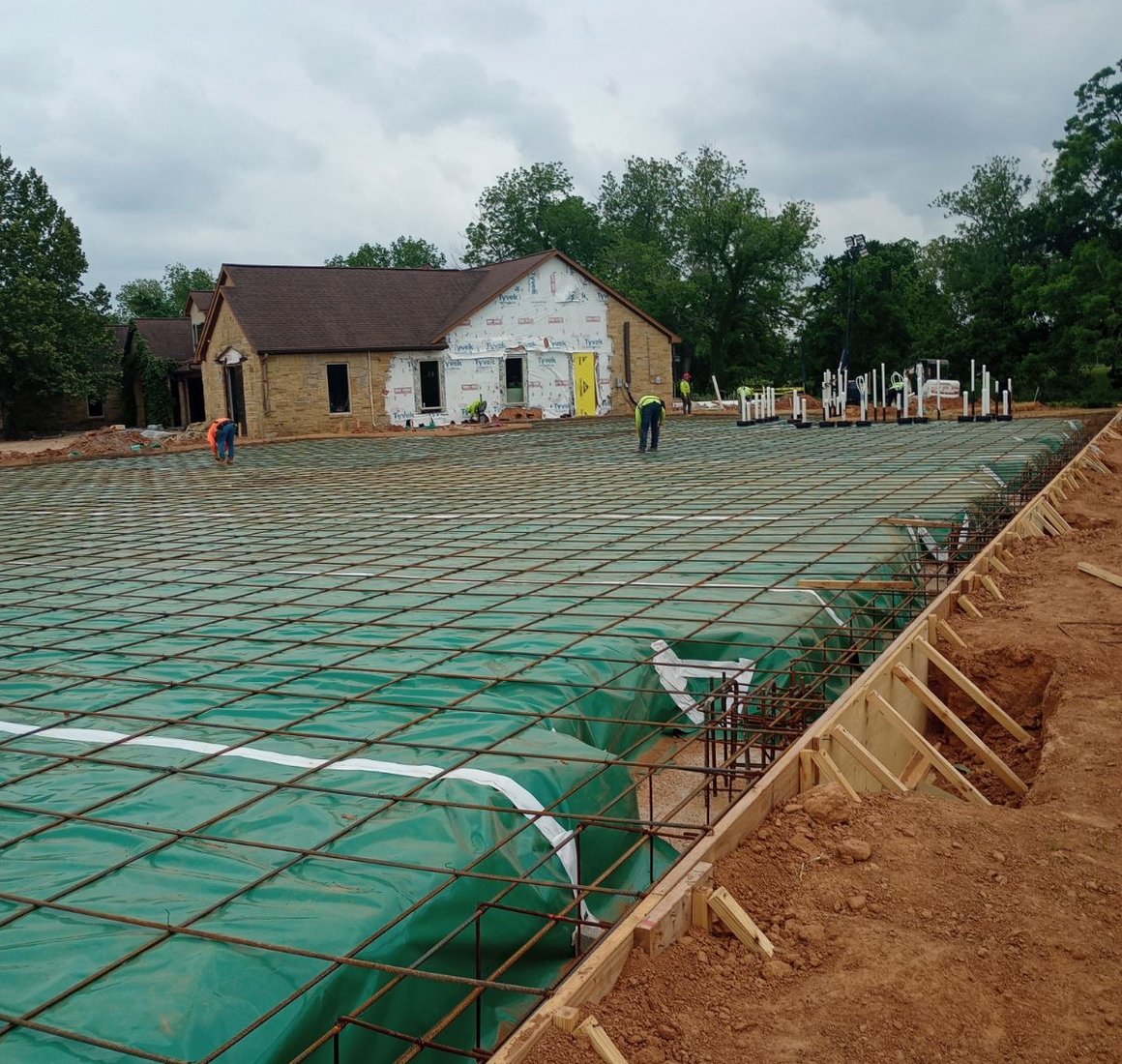
We grade and compact the base over Houston clay and set the forms. On permitted work, the city inspects before the pour. Inspections run next business day, never same day, so we book ahead.
Reinforce With Rebar
Steel rebar holds the slab together as the clay moves. Driveways get rebar on 18-inch centers. We set the slope so rain runs to the street or ditch, not toward your house.
Pour & Finish
Driveways get 4,000 PSI concrete, above our 3,500 PSI minimum for home work. We finish it the way you chose: broom, stamped, or exposed aggregate.
Cure, Seal & Walkthrough
The concrete cures, we seal it where it helps, and the city makes its final check on permitted work. Then we walk the job with you. Our written workmanship warranty backs how we built it.
What Our Customers Say
Also Serving Cities Near Houston
Outside the Houston city limits, we also work in Pasadena, Pearland, Spring, Cypress, and nine more cities. See all service areas.
Pasadena, TX
Its own city just east of Houston in Harris County, reached by SH 225. Pasadena issues its own permits, so Houston Public Works rules don't apply there.
Concrete services in Pasadena, TXPearland, TX
South of Houston along SH 288, mostly in Brazoria County. Pearland has its own city code and permit office, separate from Houston's.
Concrete services in Pearland, TXSpring, TX
North of Houston along I-45 in Harris County. Spring is not a city, so City of Houston permits don't cover work there.
Concrete services in Spring, TXCypress, TX
Northwest of Houston along US 290 in unincorporated Harris County. It sits in Houston's ETJ but outside the city limits.
Concrete services in Cypress, TX
Concrete Questions From Houston Homeowners
Straight answers from our crew. Still have a question? Call us and talk to a real person.
Get a Free EstimateDo I need a City of Houston driveway permit?
Yes, if the work reaches the public right-of-way, the strip between your property line and the street. Houston Public Works issues a Residential Driveway, Sidewalk, or Curb and Gutter permit for new, replaced, or extended driveways. You need two site plans and a copy of your property survey, and an inspector checks the work before and after the concrete is placed. We draw the plans and pull the permit as part of the job.
Who is responsible for sidewalk repair in Houston?
In most cases, you are. Chapter 40 of the Houston city code puts sidewalk upkeep on the owner of the property next to the sidewalk. The city mostly builds new sidewalks near schools, along major streets, and for people with disabilities. If you replace more than 20 feet of sidewalk, the city reviews it under its current rules, which call for a 5-foot walk on most local streets. If a street tree is lifting the walk, you need a city permit before you remove or trim that tree.
Houston has no zoning. Do deed restrictions still affect my project?
They can. Because Houston has no zoning, state law and the City Council let the city help enforce recorded deed restrictions, and its Legal Department can take a violation to court. Meyerland was one of the first deed-restricted communities in Houston, and many other subdivisions have them too. The city's permit guide warns that a permit can be revoked if the work breaks your deed restrictions. The city does not keep copies, so you get them from the county clerk. We ask you to check them before we lock in the design.
My lot is in the floodplain. Does Chapter 19 affect my concrete work?
It can. The 2018 rule that new homes in the 100-year or 500-year floodplain sit 2 feet above the 500-year flood level also covers additions that grow a home's footprint by 33 percent or more. The city applies a zero net fill rule in both floodplains too, so you can't simply truck in dirt to raise a yard. The city's permit guide says floodplain properties need approval from its Flood Plain Section on all projects. If your slab or addition falls under these rules, we plan its height and grading to match.
Why do Houston foundations move, and do you work on pier and beam homes?
A large share of Houston sits on clay from the Beaumont Formation. That clay swells when it gets wet and shrinks as it dries. As the ground moves, slabs can crack and pier-and-beam homes can settle unevenly. Common signs are doors that stick, cracks in brick, and floors that slope. We repair and level pier-and-beam foundations, and we pour new slab-on-grade foundations for new homes and additions. Every job starts with a free on-site visit, so you know what is going on before you spend anything.
Will a new patio or driveway raise my Houston drainage fee?
It might, but usually not by much. The city's drainage utility charge, run by ReBuild Houston, is based on the square feet of hard surface on your lot. Rooftops, driveways, sidewalks, and pools all count. On a curb-and-gutter street, the residential rate is 3.2 cents per square foot per year, so a 400-square-foot patio adds about $12.80 a year. On lots under 15,000 square feet, the city also reviews stormwater once hard surface covers more than 65 percent of the lot.
Planning Concrete Work in Houston?
Get a free on-site estimate anywhere in the City of Houston, from Kingwood to Clear Lake. Call Slabs on Grade or send a request, and we reply within one business day.
 (832) 422-0354