
 (832) 422-0354
  Everyday: 8:00am - 6:00pm

Commercial Parking Lot Paving in Houston, TX
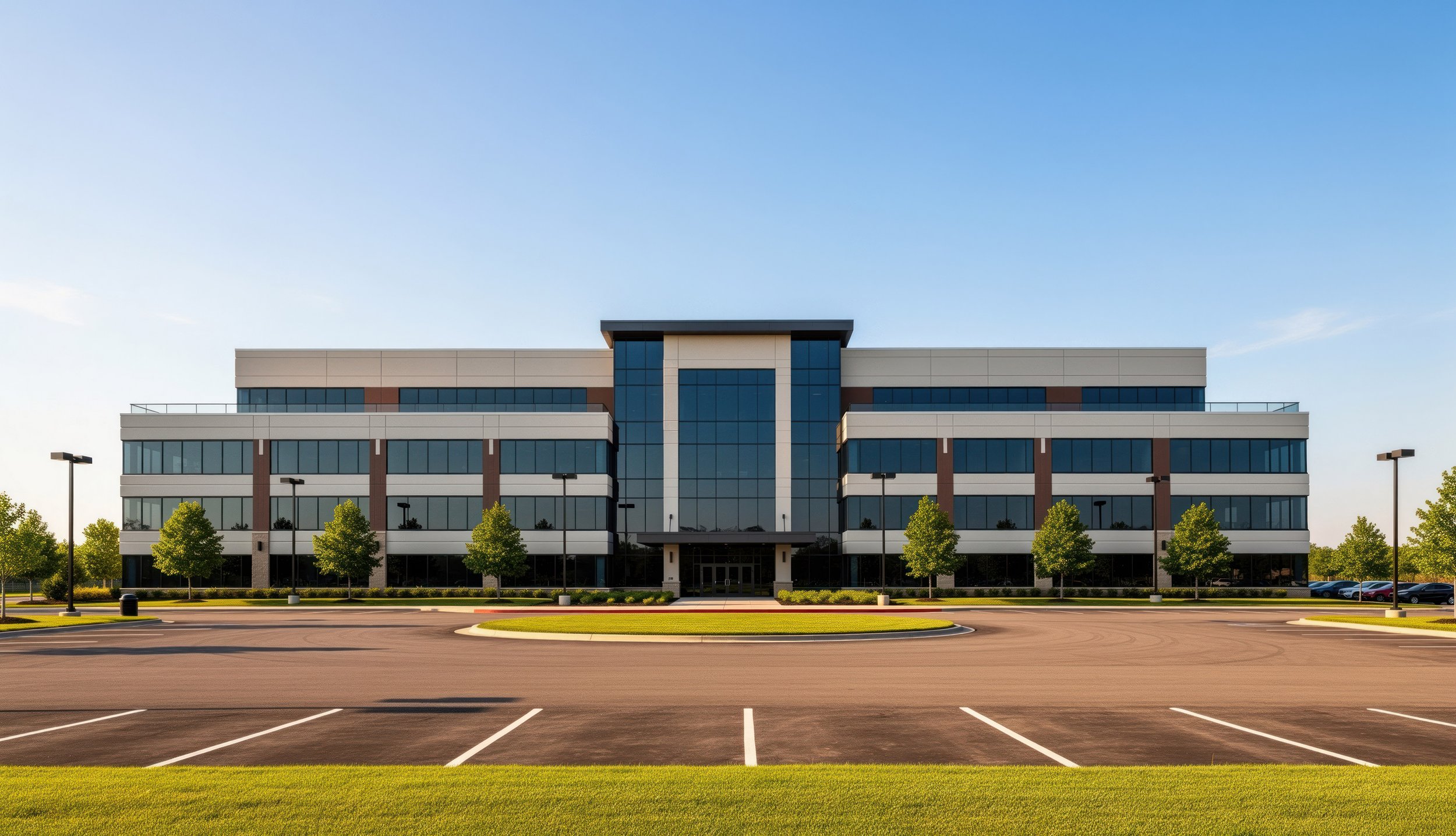
Slabs on Grade handles commercial parking lot paving in Houston and 13 nearby cities. We pour new concrete lots, replace failed sections, and fix drainage for retail centers, offices, churches, HOAs, and warehouses. We are rated 5.0 on Google, and every estimate is free.

- Family-Owned Since 2010
- 5.0 Google Rating
- Licensed & Insured
- Free On-Site Estimates
- 1,000+ Customers Served

Concrete Parking Lots in Houston
A parking lot is the first part of your property people use. When it cracks, holds water, or breaks up at the entrance, tenants and customers notice. Broken edges and sunken panels can also become trip hazards.
Houston is hard on pavement. Much of the area sits on expansive clay that swells when it is wet and shrinks when it dries. The city gets about 50 inches of rain a year, often in heavy bursts, and summer heat bakes the surface for months. A concrete parking lot that lasts here starts with the ground under it.
We handle the whole job: demolition and haul-off, grading, base prep, forms, steel, the pour, the finish, and saw-cut joints. We also pour the curbs, ramps, sidewalks, and dumpster pads that tie a lot together. Commercial parking lot paving is a core part of our commercial concrete services.
Who We Work With
- Property managers
- Retail and office owners
- Churches
- HOAs and apartment communities
- Warehouses and industrial sites
- Developers and builders
 Property managers
Parking Lot Contractors in Houston
Picking parking lot contractors in Houston is a big call for a property manager or a board. You need a crew that shows up when it says it will, keeps your site safe, and builds a lot that lasts. Here is what you get with us.
Family-Owned Since 2010
Owner Jesus Jimenez grew up working construction with his father and started Slabs on Grade with one truck. You deal directly with the family that runs the company.
Proof You Can Check
We hold a 5.0 rating from 23 Google reviews and have served more than 1,000 customers. We are licensed and insured, and we pull permits when a job needs one.
Honest Repair Advice
Not every lot needs a full tear-out. If fixing a few panels makes more sense, we will say so. You get a written scope, and our written warranty covers defects from our workmanship.


Signs Your Parking Lot Needs Repair
Most lots give warning signs long before they fail. Catch them early and parking lot repair stays smaller and cheaper. These are the problems we look for on a site visit.
Water that stands after it rains. Ponding means the grade or the drains are off. Water that sits on a lot seeps into cracks and softens the base.
Cracks that keep spreading. A few fine cracks are normal. Cracks that branch out, widen, or cross whole panels point to base or soil trouble.
Sunken or lifted panels. When slabs settle or tip, the edges turn into trip hazards and scrape the bottoms of cars.
Potholes and broken edges. These show up first at entrances, dumpster pads, and drive lanes, where trucks turn.
Open or empty joints. Failed joint sealant lets water and grit in, which speeds up damage.
Accessible parking that no longer fits the rules. Spaces that are too steep or missing a proper aisle may need new concrete, not just new paint.
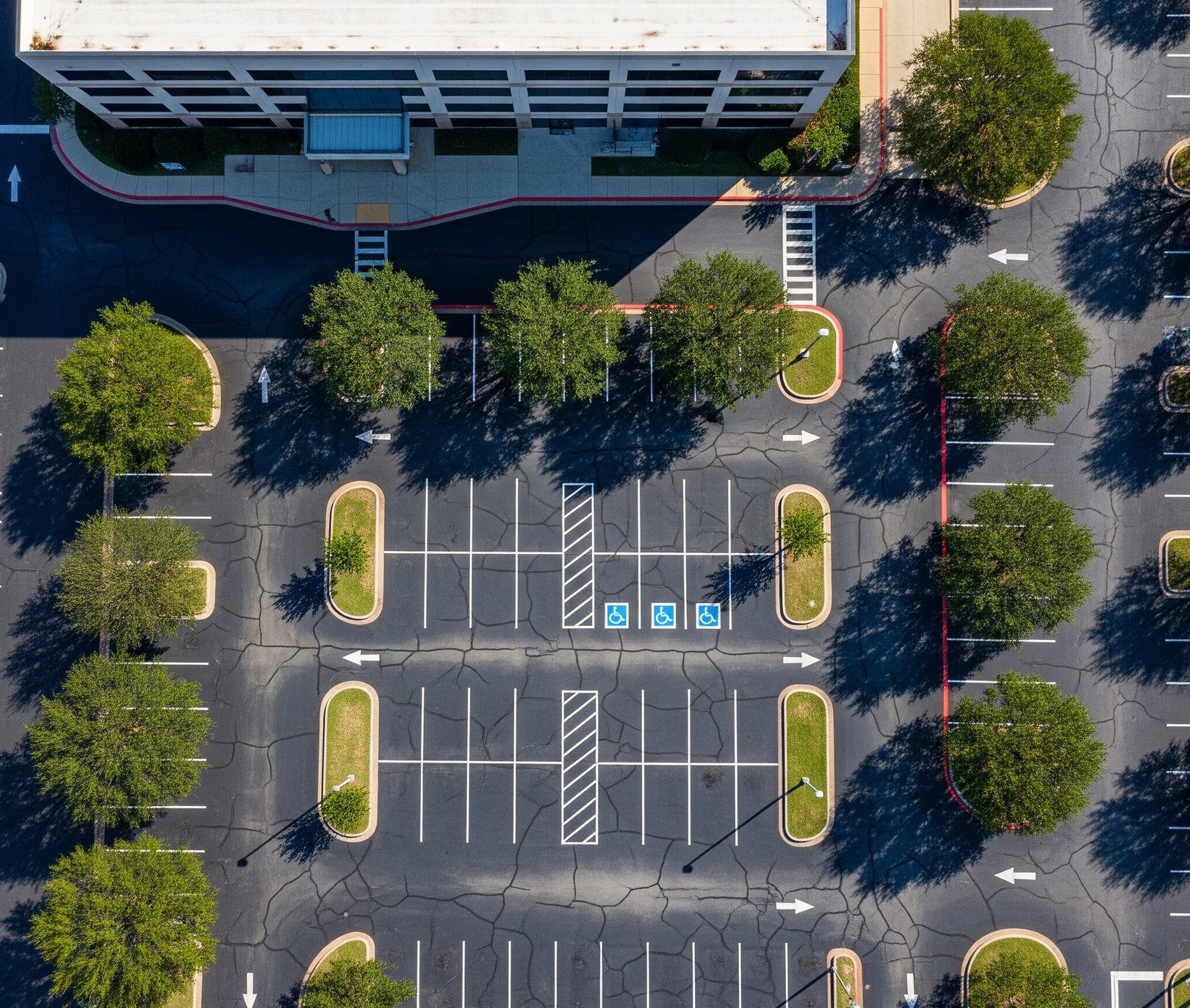
Our Parking Lot Services
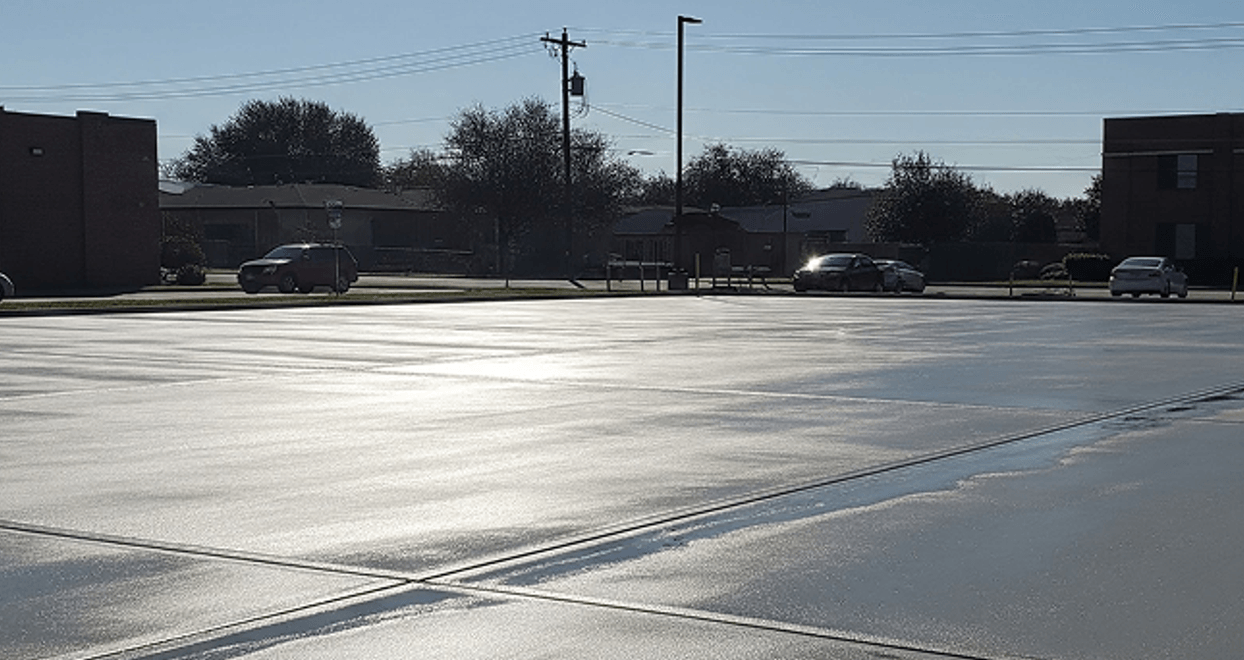
New Concrete Parking Lot Installation
New lots, lot expansions, and full tear-out and replacement. We grade for drainage, set the thickness to your traffic and site plan, and cut control joints on a planned layout. This is the right fit for new builds and for lots that are past saving.
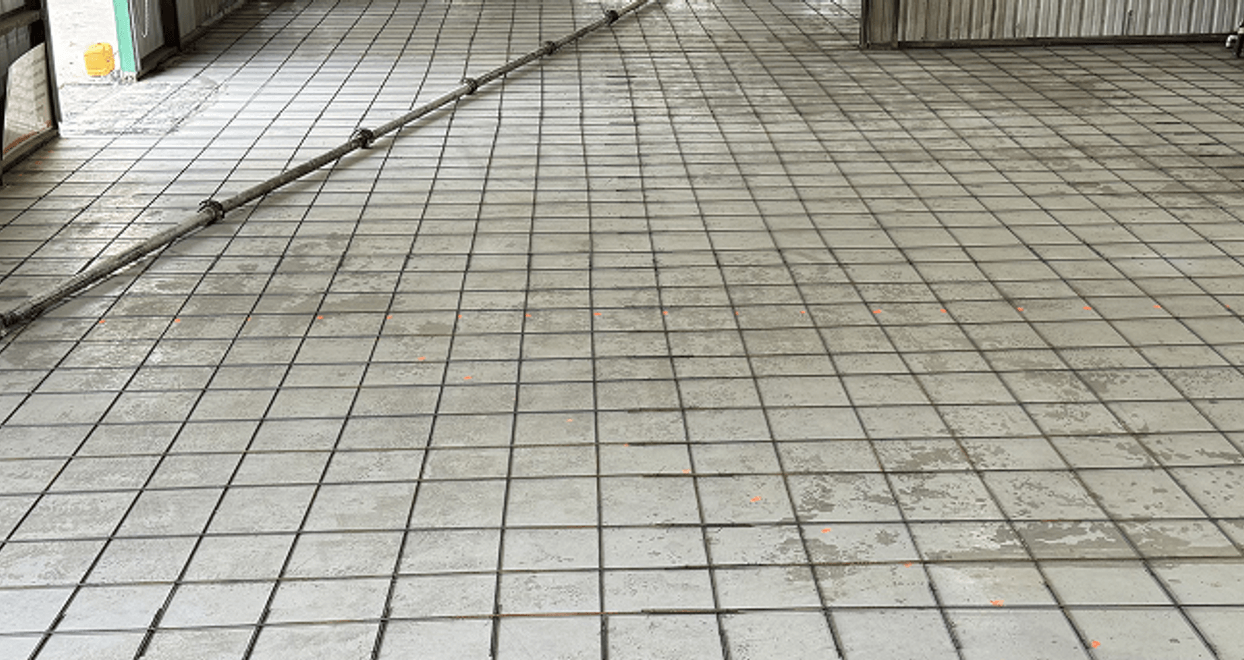
Heavy-Duty Paving for Trucks
Drive lanes, truck courts, loading dock aprons, and dumpster pads carry far more weight than a car stall. We pour these areas thicker, with more steel and a stronger mix, so they hold up under garbage trucks and deliveries.
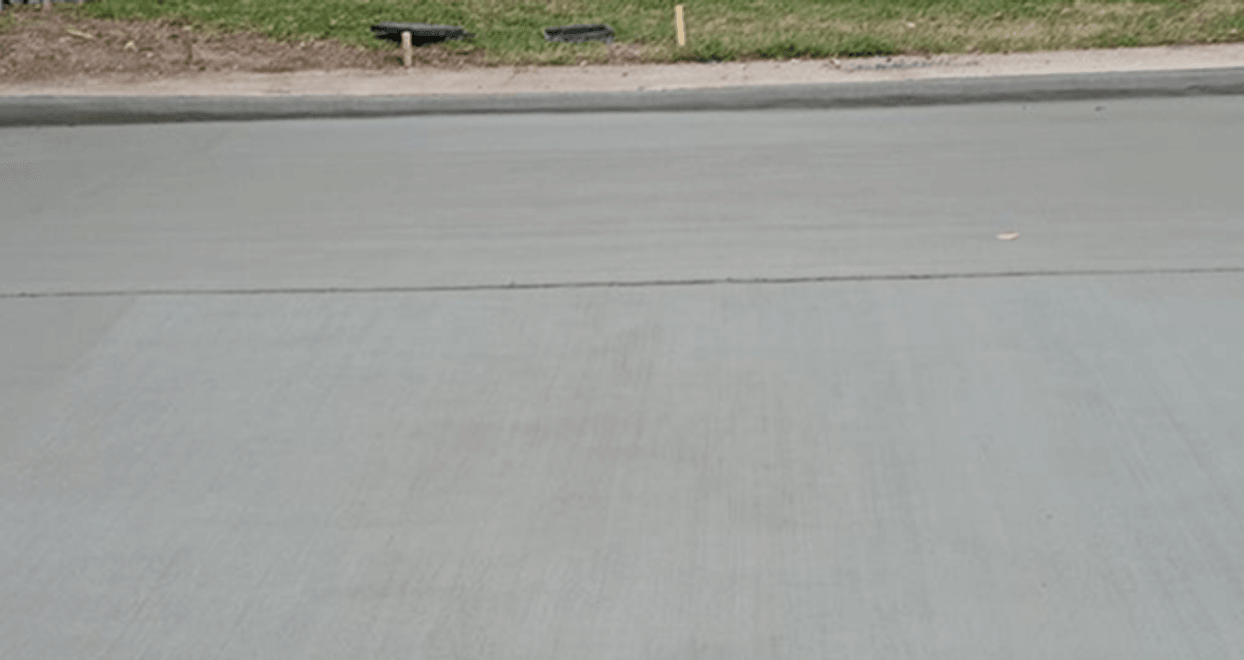
Concrete Parking Lot Repair
Cracked, sunken, or broken panels can often be saw-cut out and replaced without redoing the whole lot. We match the new concrete to the old joints and slope, and we can work in phases so part of your lot stays open.
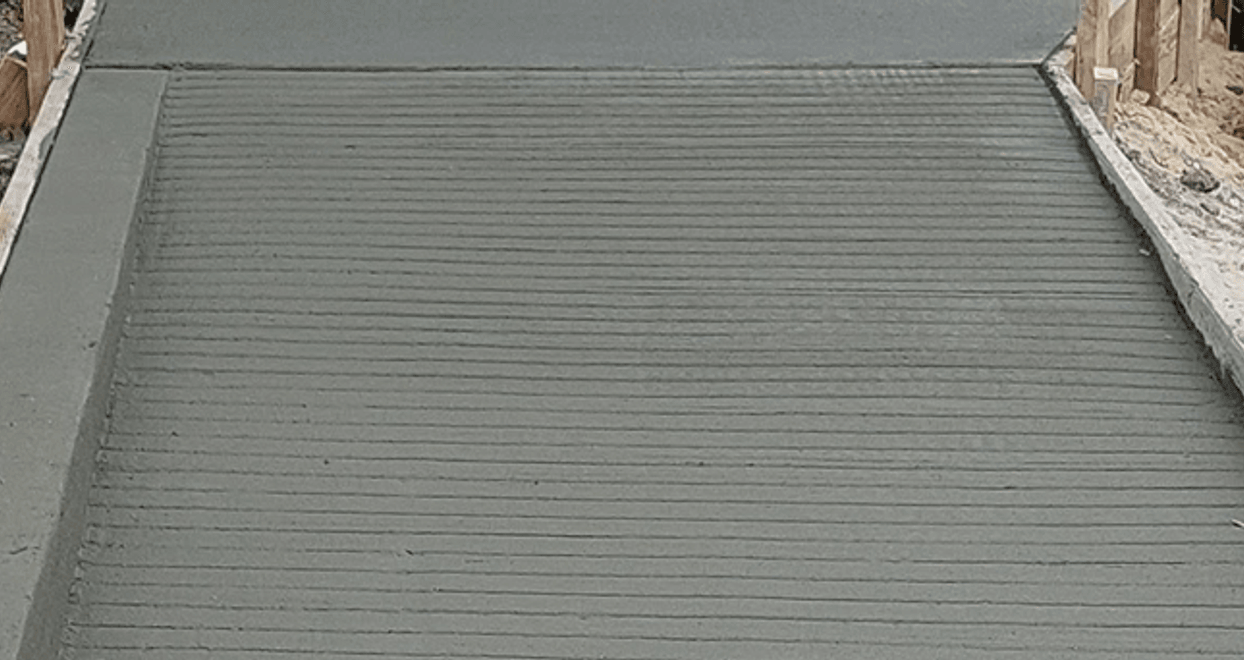
ADA Parking and Ramps
Accessible stalls and aisles, curb ramps, detectable warning pads, and the route to your front door. We pour to the slopes on your plans, and we tie the lot into our ADA sidewalk and ramp work.
Concrete vs. Asphalt Parking Lots in Houston
- 01
Lifespan
A well-built concrete parking lot in Houston can serve for decades with basic care. ACI 330, the industry guide for concrete parking lots, uses a 20-year design life as its starting point. A slightly thicker slab can stretch that design to 30 or 40 years.
- 02
Performance in Houston Heat
Asphalt is held together by a binder that softens in high heat, so it can rut and scuff under turning tires in a Houston summer. Concrete stays firm. Its lighter color also reflects more sunlight, so the surface runs cooler than black asphalt.
- 03
Maintenance
Asphalt lots are usually sealcoated every few years, on top of crack sealing and patching. A concrete lot mainly needs its joints resealed every several years and new cracks sealed as they show up.
- 04
Upfront Cost
Concrete usually costs more to install than asphalt. If you plan to hold the property for years, concrete often costs less over its life because it needs less upkeep. We will talk through the tradeoffs honestly so you can make the right call.
Our Parking Lot Paving Process
Start to Finish
Commercial concrete paving runs on schedules. We plan the job around your tenants, customers, or services, and we tell you what happens at each step.
Free On-Site Estimate
We walk the lot, measure it, check drainage and soil, and ask about traffic and timing. You get a written estimate with a clear scope. If the job needs permits, engineered plans, or a phased schedule, we tell you up front.
Demo & Removal
We saw-cut clean edges, break out the failed concrete or asphalt, and haul it off. Work zones are coned off so the rest of your site stays safe to use.
Grading & Base
This is the step many crews rush. We shape the grade so water runs to the drains, then compact the subgrade to at least 95% density, or tighter if the plans call for it. Soft spots get dug out and rebuilt.
Forms & Steel
Forms set the grade, curbs, and edges. Steel rebar goes in on chairs at the spacing the job calls for, with extra strength in truck lanes and dumpster pads.
Pour & Finish
We time the pour with the batch plant and the weather forecast. The crew places, screeds, and finishes the concrete, then adds a broom finish for traction.
Cure, Joints, & Walkthrough
The slab cures under a spray-on curing compound. We saw-cut control joints within 24 hours and walk the finished lot with you. Cars can usually park after about 7 days.
How Much Does a Concrete Parking Lot Cost in Houston?
No two lots are alike, so we don't post a flat price per square foot. The cost of a concrete parking lot comes down to a few things. We look at each one during your free on-site estimate and put the number in writing. When you request a quote, you can pick a budget range from under $5,000 to $40,000 and up, which helps us suggest the right scope.
Size and Thickness
Square footage drives most of the cost. Drive lanes, truck areas, and dumpster pads need thicker concrete and more steel than car stalls.
Site Work and Drainage
Removing an old lot, fixing soft soil, adding drains, and any detention the city requires all add to the scope.
Extras and Scheduling
Curbs, ramps, and sidewalks add cost. So does phasing the work so your business can stay open while we pave.

Need a real number for your lot? Call (832) 422-0354 or request a free quote.
Get My Free QuoteWhat Our Customers Say
Parking Lot Paving Across Greater Houston
We handle commercial parking lot paving and repair in all 14 cities we serve: Houston, Katy, Pasadena, Cypress, Pearland, Spring, Sugar Land, Missouri City, The Woodlands, Baytown, League City, Friendswood, Conroe, Tomball. Call (832) 422-0354 to set up a free site visit.
Houston, TX
Inside Houston city limits, commercial site work goes through the Houston Permitting Center, and new paving can trigger the city's stormwater detention rules. We check what your lot needs before work starts.
Cypress, TX
Cypress is a short drive from our home base in Pinehurst. We work with retail centers, churches, and HOAs across the area.
Conroe, TX
We work with businesses, churches, and HOAs in Conroe and across Montgomery County, from new lots to panel repair.
Commercial Parking Lot Questions
Straight answers from our crew. Still have a question? Call us and talk to a real person.
Get a Free EstimateHow much does a concrete parking lot cost in Houston?
It depends on the size of the lot, how thick the concrete needs to be, and how much site work comes first. Tearing out an old lot, fixing soft soil, and adding drains all add cost. Concrete costs more than asphalt to install, but it needs less upkeep over its life. We give you a free written quote after we walk the site, so the number fits your lot and is not a guess.
How long does a concrete parking lot last?
A well-built concrete lot can last for decades. ACI 330, the industry design guide for concrete parking lots, uses a 20-year design life as its starting point, and a lot can be designed a little thicker to reach 30 or 40 years. The most common causes of early failure are a weak base and poor drainage. Resealing joints and fixing cracks early helps a lot reach its full life.
How thick should a concrete parking lot be?
There is no single answer. Thickness depends on the soil, the strength of the concrete, and how many trucks use the lot each day. Car stalls can be thinner than drive lanes, fire lanes, and dumpster pads, which carry heavy trucks. ACI 330 sets thickness from those factors. If your project has engineered plans, we pour to the thickness on the plans.
Is concrete or asphalt better for a parking lot in Houston?
For most owners who plan to keep a property, concrete is the better long-term choice. It stays firm in summer heat, needs less upkeep, and holds up well at entrances and dumpster pads. Asphalt costs less up front and can make sense for a short hold or a tight budget. Some owners use both, with concrete in the truck areas and asphalt in the stalls. We pour concrete, and we will tell you plainly if it is not the right fit for your plans.
Can you repair part of a parking lot instead of replacing it?
Often, yes. Cracked, sunken, or broken panels can be saw-cut out and replaced while the rest of the lot stays in use. We also fix low spots that hold water. If the base has failed across a large area, patching will not last, and we will explain why before you spend money on it.
Do commercial parking lots in Houston need permits?
Often, yes. Inside Houston city limits, commercial site work is reviewed through the Houston Permitting Center. New paving or a rebuilt lot can also trigger the city's stormwater detention rules, and the drainage is typically designed by a civil engineer. Work in the public right-of-way, like the sidewalk along the street, goes through Houston Public Works. Other cities and county areas set their own rules. We check what your job needs up front and pull the permits when it needs them.
How long before cars can park on new concrete?
People can usually walk on it after about 48 hours. Cars can usually park after about 7 days. Heavy trucks, like garbage and delivery trucks, may need to wait longer, depending on the mix and the weather. If you need part of the lot open sooner, we can pour in phases.
Does my parking lot have to meet ADA rules?
If you build a new lot or rebuild an old one, the accessible parking has to meet the 2010 ADA Standards and, in Texas, the Texas Accessibility Standards (TAS). Accessible spaces and aisles can't slope more than 1:48 (about 2%) in any direction. Aisles must be at least 60 inches wide, and at least one in six accessible spaces must be van accessible. In Texas, covered projects with an estimated cost of $50,000 or more must be registered with TDLR and reviewed by a Registered Accessibility Specialist. We pour to the slopes on your plans.
Ready to Get Started?
Call or schedule online with Slabs on Grade today for your free on-site concrete estimate. We reply to every inquiry within one business day.
 (832) 422-0354